 Jen HoldenLicense ID:639966
- +1(443) 803-7620 jen@thejenholdengroup.com
How to Sell Your Home in Annapolis, MD: A Step-by-Step Guide
Updated on: November 2, 2026
By Jen Holden, November 3, 2026
Selling a house in Annapolis, MD follows a set order: price it from recent comparable sales, prepare it, give the buyer Maryland's required property disclosure, list it, negotiate the buyer's inspection and appraisal, and close at a settlement company where state and county transfer taxes are paid.
Key Takeaway
Selling a house in Annapolis goes best when three things are in place:
- The price comes from recent comparable sales.
- Maryland's required property disclosure reaches the buyer before the contract is signed.
- You know the state and county transfer and recordation taxes you will pay at settlement.
A pre-listing inspection, and early approval for exterior work on a Historic District home, keep surprises from derailing the sale once a buyer is under contract.
Who This Guide Is For
Homeowners in Annapolis and the surrounding parts of Anne Arundel County who are getting ready to sell and want the steps, costs and Maryland requirements in order.
Related guides: Property valuation Annapolis, Real estate commissions in Annapolis, Increase home value Annapolis, Home staging tips Annapolis, How long to sell my home in Annapolis, Seller closing costs in Annapolis, Seller disclosures in Annapolis.
Selling a House in Annapolis at a Glance
- Deliver Maryland disclosure or disclaimer before buyer signs; late delivery allows rescission.
- State transfer tax: 0.5%; 0.25% for first-time Maryland buyers, seller pays.
- County transfer 1% (1.5% at $1M+), recordation $7/$1,000, usually split.
- Inspection price depends on home size and age; add-ons cost extra.
- Historic District exterior work needs Historic Preservation Commission approval before starting.
Steps to Sell Your Home in Annapolis, MD
-
Set your goal and timeline: A fast sale and the highest net price call for different pricing and different choices about which offers to accept. Decide which matters more and when you need to be out. Choose a listing agent who sells in your part of Annapolis and can show you recent comparable sales.
-
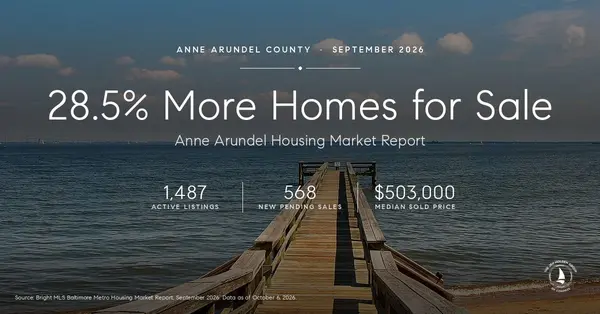
Price from recent comparable sales: A comparative market analysis reviews recent sales of similar nearby homes to set a competitive asking price. Price too high and the listing goes stale and needs cuts; price too low and you leave money behind. Annapolis prices and inventory change month to month, so compare against the current median sale price in Annapolis, MD. A formal valuation can confirm the number before you list.
-
Prepare the home: Finish repairs, cleaning and any Historic District approvals before photos and showings.
-
Decide on a pre-listing inspection: An early inspection reveals your home's condition before buyers see it, which changes how you price and negotiate.
-
Complete Maryland's seller disclosures: Use the Maryland Residential Property Disclosure and Disclaimer Statement, the standard form published by the Maryland Real Estate Commission.
- Where to find it: The current version, revision 07/31/2018, is set out at the end of COMAR chapter 09.11.07.
- Disclosure or disclaimer: The disclosure statement reports the home's condition. The disclaimer sells it as is, but you must still reveal any latent defects you know of. These are material defects that threaten health or safety and that a careful visual inspection would not reveal.
- Deadline: The buyer must receive the statement before signing the contract. If it arrives late, the buyer can rescind in writing at any time before receiving it or within 5 days after, and get the deposit back.
For a home built before 1978, federal law requires you to:
- disclose known lead-based paint and hazards;
- hand over any reports;
- give the buyer the EPA lead pamphlet;
- include a lead warning in the contract;
- allow 10 days for a lead inspection, unless both sides agree to a different period or the buyer waives it.
Condo and HOA sales add their own documents:
- Condo: Give the buyer the resale package at least 15 days before closing. It includes the declaration, bylaws, rules, budget, reserve information and any judgments or lawsuits. The buyer can cancel within 7 days of receiving it.
- HOA: Provide the association's fees, documents and rules by the contract date or within 20 days after. A buyer who gets them fewer than 5 days before signing has 5 days after receiving them to cancel.
-
List and market: Your home goes on the MLS with professional photos, and the listing is promoted online and to other agents. Showings and open houses follow. The time of year affects how quickly Annapolis homes sell, so compare recent days on market by month before choosing a list date.
-
Review offers: Confirm each buyer's pre-approval letter or proof of funds.
- Compare the terms: Look at the deposit, financing, appraisal and inspection contingencies and settlement date along with the price.
- Check closing costs: See which costs each side pays, including the transfer and recordation tax split.
- Answer a low offer: Counter on price, or offer closing-cost help, agreed repairs, a flexible move-out date, or appliances and other items that convey.
-
Get through the appraisal: A financed buyer's lender orders an appraisal to confirm the value. If it comes in below the price, you have three options:
- renegotiate the price;
- have the buyer cover the gap in cash;
- let the appraisal contingency end the contract.
The buyer or lender may also order a survey, and any repairs you agreed to must be finished before settlement.
-
Close: Settlement takes place at a title or settlement company, where you sign the deed and your share of the transfer and recordation taxes is paid from your proceeds.
- Move-out: Possession passes on the date in the contract, so finish your move-out by then.
- Services: Cancel or transfer utilities and services such as trash and lawn care.
- Manuals: Leave manuals for appliances that convey.
- Downsizing: If you are downsizing to a smaller home in Annapolis, line up both settlement dates so the sale proceeds are ready for the purchase.
What It Costs to Sell a Home in Annapolis
Maryland taxes the transfer of real estate at both the state and county level, and these taxes come out at settlement.
- State transfer tax: 0.5% of the price. When the buyer is a qualifying first-time Maryland homebuyer who will live in the home, the rate drops to 0.25% and the seller pays all of it.
- Anne Arundel County transfer tax: 1.0% of the price, or 1.5% on sales of $1 million or more. The county exempts the first $50,000 of the price when the home will be the buyer's principal residence. Confirm this with your settlement company.
- County recordation tax: $7.00 per $1,000 of the price, rounded up to the nearest $500.
Customarily, buyer and seller split the county transfer and recordation taxes evenly, but the contract can set a different division. With a first-time buyer, the seller also picks up the buyer's share of the county transfer and recordation taxes unless the contract says otherwise.
The listing commission is usually the largest single cost of selling, and commission rates are negotiable. Other items on your settlement statement:
- Mortgage payoff: whatever you still owe on the loan.
- Property taxes: prorated to the settlement date.
- Title and settlement items: fees the settlement company handles.
- Buyer credits: any repair or closing-cost credits you agreed to.
Before accepting an offer, review a line-by-line seller closing cost estimate with your realtor. Rerun it for each offer, since price and credits change what you take home.
Preparing Your Annapolis Home for Sale
Fix what an inspector or appraiser will flag first: roof leaks, water intrusion, and electrical, HVAC or plumbing problems that affect safety or function. Then move to cosmetic work such as fresh paint, deep cleaning, decluttering, depersonalizing and curb appeal.
In the Annapolis Historic District, every exterior change requires a Certificate of Approval, and it can come two ways:
- Administrative approval: Work that meets the Commission's published guidelines can get an administrative approval after staff review.
- Public hearing: Other projects go to a public hearing. The Commission generally meets once a month and has a 45-day decision limit.
Build that time into your listing date. Gather records of past approvals and any condominium or association rules, since buyers of older homes want to know what changes are allowed.
On a waterfront home, check the condition of piers, docks, boat lifts and bulkheads, and collect permits and repair records. Water access and boat slips are strong listing features, so feature them in your marketing.
Home staging techniques such as rearranging furniture for flow, neutral decor and highlighting natural light help buyers picture themselves in the home. Which renovations raise home value depends on the house and price point, so get pricing advice before starting a large project.
Pre-Listing and Buyer Home Inspections in Annapolis
A pre-listing inspection is a full home inspection you order before going on the market. It lets you fix problems or price them in, and it means fewer surprises after the contract is ratified. The trade-off is that what it finds becomes known to you. It then belongs on a disclosure statement, and a known latent defect must be revealed even if you sell with the disclaimer.
Common add-ons, each priced separately, include:
- wood-destroying insect inspections;
- radon testing;
- well and septic inspections;
- sewer line inspections;
- chimney inspections;
- pier or bulkhead inspections on waterfront property.
Get a quote that lists each one.
Maryland licenses home inspectors through the Maryland Commission of Real Estate Appraisers, Appraisal Management Companies and Home Inspectors, part of the Maryland Department of Labor. Confirm an inspector's license before you hire.
The buyer's inspection happens within the window set in the contract. When the buyer asks for repairs, you can make the repairs, give a credit, lower the price or decline. If you cannot agree, the buyer can walk away within the inspection contingency.
Cash Buyers, Flat-Fee Listings or a Listing Agent
Cash home buyer companies provide fast funding and typically purchase properties as-is, meaning you avoid repair costs and showings. Investor cash offers trade price for speed and usually come in below open-market value, so compare the offer with your pricing analysis.
A flat-fee MLS listing, or selling by owner, is another route. You pay a set fee to appear on the MLS but handle pricing, showings, negotiation and paperwork yourself, and you may still be asked to pay the buyer's agent.
Partnering with a real estate agent takes more time but generally results in the best price. An agent markets your Annapolis home to a broad audience of traditional buyers, generating competition that can drive up the final number. While you will pay a commission fee, covered in the costs section above, the higher market value often offsets this cost.
You should evaluate your timeline and current home equity before making a decision. If maximizing profit is your primary goal, listing on the open market is usually the smartest financial move.
Frequently Asked Questions
Do I Have to Pay Taxes If I Sell My House in Maryland?
Yes. Beyond your share of the transfer and recordation taxes, federal law lets you exclude some or all of the gain on a primary home if you meet the IRS ownership-and-use test. Gain the exclusion does not cover is reported on your federal and Maryland returns. A seller who is not a Maryland resident should expect Maryland tax to be withheld at settlement, so ask a tax adviser before you close.
What Should I Not Fix Before Selling My House?
Skip major, expensive renovations like full kitchen remodels, which rarely return what they cost, and leave personalized upgrades to the new owner.
Can I Sell My Annapolis Home If I Still Have a Mortgage?
Yes. If the price will not cover the payoff plus selling costs, you must bring cash to closing or ask your lender about a short sale.
Do I Need a Lawyer to Sell a House in Maryland?
No. Maryland does not require an attorney to conduct or attend a residential closing; a settlement agent, most often from a title company, conducts it. Sellers commonly hire an attorney for estate sales, title problems or a contract dispute.
Sources
- Maryland Real Property §10-702: Disclosure and Disclaimer Statement: delivery deadline, latent defects and rescission right
- COMAR 09.11.07.01: Maryland Real Estate Commission disclosure form: the official disclosure and disclaimer form
- 24 CFR 35.90: Lead-based paint disclosure: pre-1978 lead disclosure and 10-day inspection period
- Maryland Real Property §11-135: Condominium resales: condo resale package and 7-day cancellation
- Maryland Real Property §11B-106: Homeowners association resales: HOA disclosures and 5-day cancellation
- Maryland Tax-Property §13-203: State transfer tax: state rate and first-time buyer rate
- Recordation and Transfer Tax Rates in Maryland Explained: Anne Arundel County rates and customary split
- Historic Annapolis: Preservation: Historic Preservation Commission approval for exterior work
- Annapolis Historic Preservation Commission By-Laws: monthly hearings, administrative approvals and 45-day limit
- Home Inspection Requirements for Maryland: Maryland home inspector licensing
- Maryland Real Property §3-104: Recording requirements: no attorney required at a residential closing
Categories
Recent Posts